Abstract
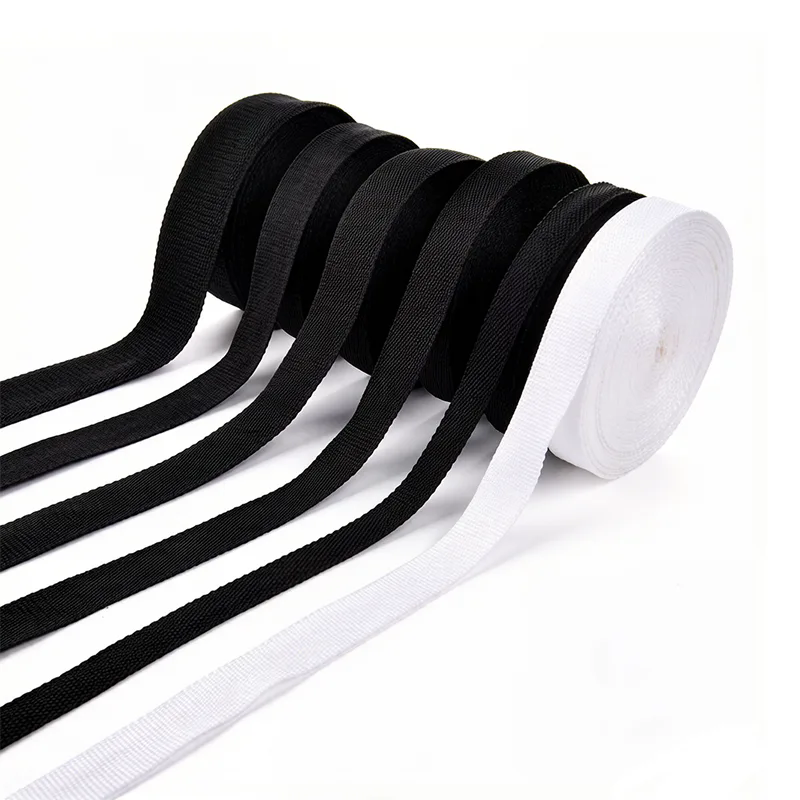
Webbing tape is a foundational industrial and commercial textile component widely used for load bearing, reinforcement, securing, lifting, and structural support applications.
Despite its simplicity in appearance, it plays a critical role in safety and performance across sectors such as automotive, construction, outdoor equipment, marine, and logistics.
This article explains how webbing tape works, its material structure, functional mechanisms, selection criteria, and real-world applications, helping buyers and engineers make informed decisions and avoid common usage mistakes.
Introduction
Webbing tape is often underestimated due to its flat, ribbon-like appearance. However, it is engineered with high-tensile fibers that distribute force evenly across its width,
making it significantly stronger than traditional rope of similar dimensions. It is widely used as a load-bearing element in both dynamic and static environments.
In industrial procurement and product design, understanding how webbing tape works is essential for safety compliance, durability optimization, and cost efficiency.
What Is Webbing Tape?
Webbing tape is a woven strip of synthetic or natural fibers designed to withstand high tension and mechanical stress.
It is typically manufactured using polyester, nylon, polypropylene, or high-performance fibers such as aramid.
Its structure is engineered to provide:
-
High tensile strength
-
Low elongation (depending on material type)
-
Resistance to abrasion and environmental wear
-
Flexible yet stable load distribution
Materials and Structural Composition
The performance of webbing tape is heavily dependent on fiber composition and weaving density. Below is a simplified comparison:
|
Material
|
Key Feature
|
Best Use Case
|
|
Polyester
|
UV resistant, low stretch
|
Outdoor straps, cargo securing
|
|
Nylon
|
High elasticity, shock absorption
|
Climbing gear, dynamic loads
|
|
Polypropylene
|
Lightweight, water resistant
|
Marine and packaging use
|
|
Aramid
|
Extreme heat and strength resistance
|
Aerospace, military applications
|
The weaving pattern also affects performance. Tight weaves increase strength and reduce elongation, while looser weaves improve flexibility.
Types of Webbing Tape
-
Flat Webbing: Standard load-bearing applications
-
Tubular Webbing: Enhanced flexibility and cushioning
-
Elastic Webbing: Used in adjustable tension systems
-
Reflective Webbing: Safety visibility in low-light environments
How Webbing Tape Works in Load Applications
The working principle of webbing tape is based on force distribution and fiber alignment. When a load is applied, tension is spread evenly across the woven fibers,
reducing stress concentration points that typically cause failure in ropes or single-strand materials.
Key functional mechanisms include:
-
Load distribution: Spreads force across the entire width
-
Frictional stability: Woven structure prevents slippage
-
Elastic control: Controlled elongation under stress
-
Energy absorption: Especially in nylon-based tapes
This makes webbing tape an essential component in systems where safety and predictable mechanical behavior are required.
Key Applications Across Industries
Webbing tape is used in multiple sectors due to its adaptability and mechanical reliability:
-
Automotive: Seat belts, cargo restraints
-
Construction: Safety harnesses, lifting slings
-
Outdoor gear: Backpacks, climbing equipment
-
Marine industry: Boat rigging and securing systems
-
Logistics: Pallet strapping and cargo stabilization
How to Choose the Right Webbing Tape
Selecting the appropriate webbing tape requires evaluating mechanical load requirements, environmental exposure, and safety standards.
-
Load capacity: Always match rated strength with application requirements
-
Environmental conditions: UV, moisture, and chemical exposure
-
Elasticity needs: Static vs dynamic load behavior
-
Certification: Industry compliance standards
For industrial-grade solutions, manufacturers such as Ningbo Derusen Trading Co., Ltd. provide a wide range of engineered webbing tape products designed for demanding environments.
More technical specifications can be reviewed at https://www.derusen.com/webbing-tape.html.
Installation and Usage Guidelines
Proper installation ensures maximum safety and lifespan of webbing tape systems:
-
Inspect the tape for cuts, fraying, or contamination before use
-
Ensure load is aligned with the longitudinal fiber direction
-
Avoid sharp edges that may cause abrasion damage
-
Do not exceed rated working load limit
-
Store in dry, UV-protected environments when not in use
Maintenance and Safety Considerations
Webbing tape requires periodic inspection to ensure structural integrity. Environmental degradation such as UV exposure, moisture absorption, and chemical contact can reduce tensile strength over time.
-
Replace damaged or worn webbing immediately
-
Avoid prolonged outdoor exposure without UV-resistant coating
-
Clean using mild detergent and air dry only
-
Document usage cycles in safety-critical applications
Frequently Asked Questions
Q1: Is webbing tape stronger than rope?
Yes, due to its flat structure and even load distribution, webbing tape typically provides higher tensile efficiency than rope of similar thickness.
Q2: Can webbing tape be used outdoors?
Yes, especially polyester-based webbing which offers strong UV resistance and weather durability.
Q3: What is the lifespan of webbing tape?
It depends on usage conditions, but industrial-grade tape can last several years under proper maintenance.
Q4: Can webbing tape be repaired?
No. Damaged sections should be replaced rather than repaired to ensure safety.
Conclusion
Webbing tape is a critical engineering material that combines flexibility, strength, and reliability in a compact woven structure.
Its ability to distribute loads evenly makes it indispensable in safety-critical and industrial applications.
Choosing the correct material type, understanding load requirements, and maintaining proper usage practices are essential for maximizing performance and safety.
Solutions from Ningbo Derusen Trading Co., Ltd. ensure consistent quality and engineering reliability across diverse applications.
For customized specifications, bulk procurement, or technical consultation, contact us to explore professional webbing tape solutions tailored to your industry needs.