

Choosing the right Embroidery Thread can directly affect stitch definition, color appearance, machine performance, and finished-product durability. DERUSEN supplies high-quality embroidery thread for apparel and non-apparel applications, with high-tenacity polyester construction, low elongation, more than 800 color options, and specifications designed for high-speed embroidery operations.
Professional embroidery requires more than attractive colors. The thread must provide stable tension, reliable stitch formation, strong abrasion resistance, consistent dye performance, and compatibility with high-speed embroidery equipment. DERUSEN embroidery thread is made from 100% polyester and engineered for demanding production environments. Available counts include 75D, 120D, 150D, 210D, 250D, 300D, 450D, and 600D, with multiple ply options and more than 800 available colors. Package lengths range from 1,000 to 5,000 yards or meters per cone, while different cone weights can be supplied for production requirements.
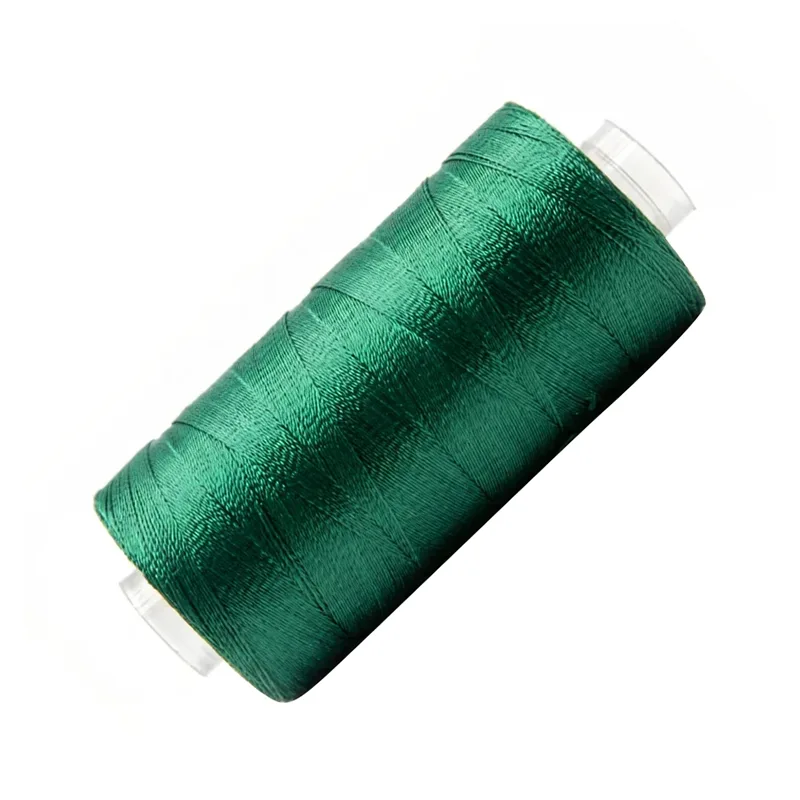
Table of Contents
- What Is Embroidery Thread and Why Does It Matter?
- What Performance Characteristics Should You Look For?
- Embroidery Thread Specifications and Options
- Where Can Embroidery Thread Be Used?
- How Should You Choose the Right Thread?
- Why Does Thread Consistency Matter in High-Speed Production?
- Quality, Safety, and Color Customization
- Frequently Asked Questions
- Conclusion
What Is Embroidery Thread and Why Does It Matter?
Embroidery thread is a specialized textile thread designed to create decorative or functional stitched patterns on garments, footwear, bags, household textiles, promotional products, and other materials. Compared with ordinary sewing thread, embroidery thread places greater emphasis on appearance, smooth running, color consistency, stitch definition, and resistance to repeated mechanical movement.
In commercial embroidery, the thread travels through guides, tension systems, needles, and fabric at high speed. Any instability in thread construction can result in thread breaks, uneven stitches, excessive lint, inconsistent tension, or visible defects. For this reason, selecting a thread based only on price or color is rarely sufficient.
A high-quality polyester solution can provide a practical balance between strength, durability, appearance, and production stability. DERUSEN's product is manufactured with high-tenacity polyester and advanced dyeing technology to support consistent performance on high-speed, multi-head embroidery machines.
What Performance Characteristics Should You Look For?
When evaluating embroidery thread for commercial production, buyers should consider several technical characteristics rather than focusing on a single specification.
High Tenacity
High tensile strength helps the thread withstand the repeated pulling forces created during embroidery. This is particularly important for multi-head machines and continuous production where frequent thread breaks can reduce productivity.
Low Elongation and Low Shrinkage
Stable dimensional behavior helps maintain consistent stitch formation. Excessive elongation can affect tension and pattern accuracy, while uncontrolled shrinkage may influence the appearance of the embroidered design after processing.
Excellent Colorfastness
Embroidery often functions as a highly visible decorative element. Strong color retention helps designs maintain their intended appearance through handling, cleaning, and normal product use.
Smooth Sewability
Smooth thread movement is essential for high-speed machines. Consistent construction can reduce unnecessary interruptions and help maintain uniform stitching across multiple production runs.
- High tensile strength for demanding embroidery operations
- Low elongation for stable stitch formation
- Good abrasion resistance for repeated mechanical movement
- Excellent luster for attractive finished designs
- Wide color availability for creative flexibility
- Consistent performance for high-speed embroidery machines
Embroidery Thread Specifications and Options
Different embroidery projects require different thread sizes, package formats, and colors. A broad specification range allows manufacturers and embroidery service providers to match the material to their equipment and finished-product requirements.
| Specification | Available Options | Typical Consideration |
|---|---|---|
| Material | 100% Polyester | Strength, durability, and stable production performance |
| Counts | 75D, 120D, 150D, 210D, 250D, 300D, 450D, 600D | Selected according to design and application requirements |
| Ply | Multiple ply options | Helps meet different embroidery and textile requirements |
| Color Range | 800+ colors | Supports detailed and customized embroidery designs |
| Length | 1,000–5,000 yards or meters/cone | Suitable for different production volumes |
| Cone Weight | 250 g, 300 g, 500 g, 1 kg, and other options | Can be matched to equipment and purchasing requirements |
This flexibility is particularly useful for manufacturers handling multiple embroidery designs or production orders. Buyers can select suitable counts, lengths, weights, and colors rather than relying on a single standard configuration.
Where Can Embroidery Thread Be Used?
High-quality thread is suitable for both decorative and functional textile applications. Its combination of color range, durability, and sewability makes it suitable for a variety of products.
- Apparel: logos, lettering, decorative motifs, badges, and fashion details.
- Footwear: embroidered branding and decorative patterns.
- Bags: logos, personalized graphics, and ornamental designs.
- Home textiles: decorative embroidery on selected textile products.
- Technical textiles: applications where consistent stitching and durability are important.
- Craft and artware: decorative textile products, customized designs, and creative projects.
- Weaving and knitting: applications requiring suitable colored textile yarn materials.
For manufacturers serving different markets, the ability to use one reliable thread supplier across multiple product categories can simplify purchasing, quality control, and color management.
How Should You Choose the Right Thread?
Selecting the correct thread starts with understanding the embroidery machine, fabric, design density, needle specification, production speed, and appearance requirements.
1. Consider the Fabric
Lightweight garments, denim, leather-related products, bags, and technical textiles can place different demands on thread. The thread count should be matched with the material and desired visual effect.
2. Check Machine Speed
If production relies on high-speed multi-head embroidery machines, thread consistency becomes particularly important. A thread engineered for high-speed operation can help reduce unnecessary interruptions caused by instability.
3. Match the Thread Count
Different counts influence the visual thickness and stitch coverage of the finished design. Buyers should consider both the embroidery pattern and the required level of detail when choosing a specification.
4. Evaluate Color Requirements
Large color availability is valuable for brands, garment manufacturers, promotional products, and customized embroidery businesses. DERUSEN offers more than 800 colors, while colors can also be dyed according to its color card, a customer's color card, or supplied color samples.
Why Does Thread Consistency Matter in High-Speed Production?
In industrial embroidery, production efficiency depends on maintaining stable performance from the first stitch to the last. A small inconsistency in thread can become a significant problem when multiplied across thousands of embroidered products.
Consistent thread construction supports predictable tension and stitch formation. This is especially valuable for multi-head equipment because multiple embroidery heads may operate simultaneously. Stable performance helps manufacturers reduce manual intervention and maintain consistent appearance across production batches.
Abrasion resistance is another important consideration. During high-speed operation, the thread repeatedly passes through machine components and fabric. A durable construction can better withstand these mechanical stresses and contribute to reliable production.
From a purchasing perspective, consistency also matters because repeat orders should maintain similar color, appearance, and running characteristics. This helps textile manufacturers maintain quality standards across different production cycles.
Quality, Safety, and Color Customization
Quality assurance should extend beyond basic tensile strength. For textile applications involving direct or prolonged skin contact, buyers may also consider whether the material has been tested against relevant safety requirements.
DERUSEN embroidery thread is certified to OEKO-TEX® STANDARD 100, Class 1, according to the manufacturer's product information. This certification provides an additional reference point for buyers looking for textile materials designed with harmful-substance requirements in mind.
The manufacturing process also emphasizes advanced dyeing technology, consistent sewability, color range, luster, durability, and suitability for high-speed operation. For customized projects, the availability of color matching from a supplier's color card, customer color card, or physical color sample can make procurement more flexible.
Buyers can also benefit from flexible ordering options. DERUSEN states that small orders are accepted and that prompt shipment and quality assurance are part of its service offering. These options can be useful for sampling, new product development, seasonal collections, and smaller production runs.
Frequently Asked Questions
What material is DERUSEN embroidery thread made from?
DERUSEN embroidery thread is made from 100% polyester. The product is designed for high tensile strength, low elongation, good colorfastness, abrasion resistance, and stable performance during embroidery.
How many colors are available?
More than 800 colors are available. Customized colors can also be dyed according to the supplier's color card, a customer's own color card, or supplied color samples.
What thread counts are available?
Available counts include 75D, 120D, 150D, 210D, 250D, 300D, 450D, and 600D, with additional ply configurations available according to project requirements.
Is this thread suitable for high-speed embroidery machines?
Yes. The product is specifically engineered for high-speed operation and is designed to provide consistent sewability on high-speed multi-head embroidery machines.
What packaging options are available?
Standard options include approximately 1,000 to 5,000 yards or meters per cone. Cone weights can include 250 g, 300 g, 500 g, and 1 kg, with other packaging options available depending on requirements.
Is the embroidery thread OEKO-TEX certified?
Yes. DERUSEN states that its embroidery thread is certified to OEKO-TEX® STANDARD 100, Class 1.
Conclusion
The right embroidery thread is an important production material rather than simply a source of decorative color. Strength, low elongation, colorfastness, abrasion resistance, smooth sewability, and dimensional consistency can all influence the final embroidery quality and production efficiency. With 100% polyester construction, multiple counts, more than 800 color choices, flexible packaging options, and OEKO-TEX® STANDARD 100 certification, DERUSEN provides embroidery thread solutions for apparel, footwear, bags, textiles, and other applications. Whether you are developing a new embroidery project or optimizing an established production line, contact us to discuss suitable specifications, colors, packaging, and customized requirements.