
Article Summary: Hook and loop fasteners provide a practical reusable fastening solution for apparel, medical products, sports equipment, luggage, outdoor gear, automotive interiors, consumer electronics, and industrial applications. With woven hooks and flexible loops designed for repeated engagement and separation, they offer convenient adjustment, secure attachment, and flexible installation. Derusen provides multiple material combinations, widths, colors, adhesive options, and functional treatments to support different product requirements.
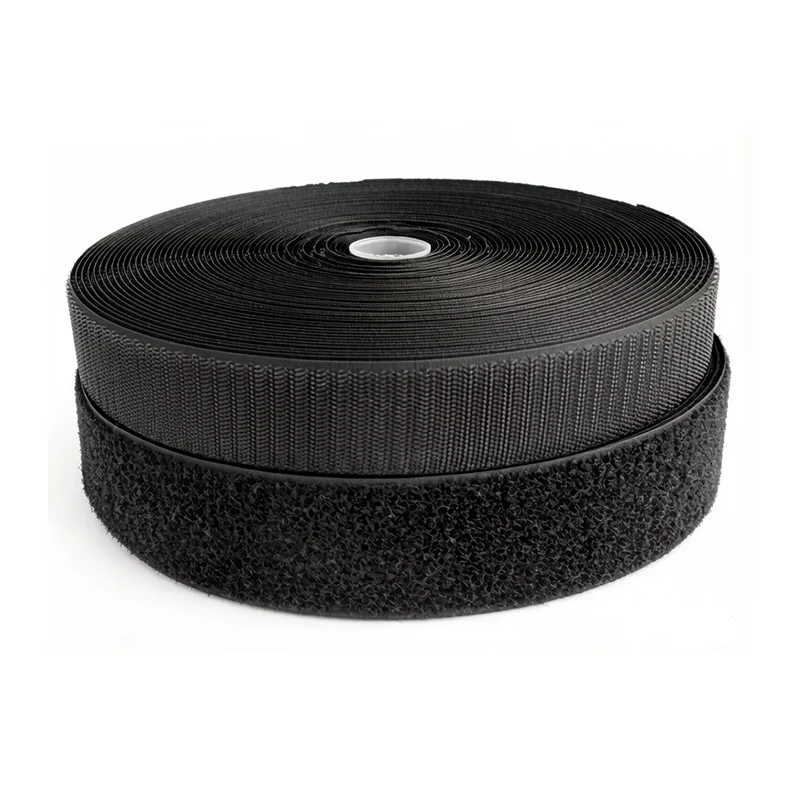
Table of Contents
- What Is Hook and Loop and How Does It Work?
- What Types and Materials Are Available?
- Where Can Hook and Loop Be Used?
- How Should You Select the Right Fastener?
- Key Specifications and Customization Options
- What Quality Factors Matter in Production?
- Frequently Asked Questions
- How Can You Get the Right Solution?
What Is Hook and Loop and How Does It Work?
Hook and loop is a reusable fastening system consisting of two complementary woven surfaces. One side contains small, relatively rigid hooks, while the other side contains softer loops. When the two surfaces are pressed together, the hooks engage with the loops to create a secure connection. Pulling the two layers apart separates them without permanently damaging the fastening structure.
This simple mechanism makes hook and loop particularly useful when products need frequent opening, closing, adjustment, removal, or repositioning. Unlike permanent adhesives, stitching-only closures, or traditional mechanical fasteners, it can combine convenient operation with flexible product design.
According to Derusen's product information, its standard products can be supplied in different material combinations, including 100% nylon, 70% nylon and 30% polyester, 30% nylon and 70% polyester, and 100% polyester. The manufacturer also offers multiple specialized constructions for different application environments.
- Reusable fastening: Designed for repeated attachment and separation.
- Adjustable connection: The fastening position can be changed according to product requirements.
- Flexible installation: Sewing and adhesive-backed options support different assembly methods.
- Easy customization: Width, color, pattern, backing, and functional treatments can be customized.
- Broad application range: Suitable for textile, medical, sporting, outdoor, automotive, and industrial products.
What Types and Materials Are Available?
Choosing the correct construction is important because the fastening environment can vary significantly. A garment accessory may prioritize softness and appearance, while outdoor equipment may require resistance to moisture and environmental exposure. Industrial products may require higher strength, dimensional consistency, or specialized surface treatments.
| Type | Main Characteristic | Typical Applications |
|---|---|---|
| Standard Hook and Loop | General-purpose reusable fastening | Apparel, bags, home products |
| Woven Hook and Loop | Woven edge construction helps reduce wire-off issues | Garments, textile products, accessories |
| Adhesive Hook and Loop | Pressure-sensitive adhesive backing | Quick installation and non-sew applications |
| Flame-Resistant Hook and Loop | Designed for specific flame-resistance requirements | Aviation-related products and protective clothing |
| Plastic Hook and Loop | Injection-molded construction | Sports and outdoor products |
| Un-napped Loop | Designed to work with compatible plastic hooks | Outdoor products, ski suits, tents |
Material selection also affects durability, flexibility, color performance, and application suitability. Nylon and polyester are common choices, while blended constructions can help manufacturers balance performance and cost.
For buyers comparing textile fastening solutions, related products such as webbing and tape can also be considered when the final product requires integrated straps, reinforcement, or adjustable textile components.
Where Can Hook and Loop Be Used?
The versatility of hook and loop allows it to be incorporated into products that require a combination of fastening convenience and repeated use. The appropriate specification depends on the load, frequency of operation, installation method, environmental conditions, and desired appearance.
Apparel and Textile Products
In clothing, uniforms, protective garments, and textile accessories, hook and loop can provide adjustable closures without requiring buttons, zippers, or complicated mechanical components. Its flexible construction also allows designers to integrate fastening zones into different garment structures.
Medical and Healthcare Products
Medical supports, braces, adjustable straps, and healthcare accessories may benefit from easily adjustable fastening. The ability to repeatedly open and close the connection can simplify fitting and product handling.
Sports and Outdoor Equipment
Sports safety equipment, fitness products, tents, ski clothing, outdoor accessories, and protective equipment often require adjustable fastening. Specialized constructions can be selected according to the expected environmental conditions and mechanical requirements.
Bags, Luggage, and Pet Products
Backpacks, luggage accessories, pet harnesses, and straps frequently require adjustable attachment points. Hook and loop can help manufacturers create convenient closures while maintaining a relatively simple assembly structure.
Industrial and Automotive Applications
Industrial applications may use fastening systems for positioning, bundling, removable panels, protective covers, cable-management components, and other assemblies. Automotive interiors can also use textile fastening where removable or adjustable components are required.
How Should You Select the Right Fastener?
Product selection should begin with the actual operating conditions rather than choosing solely according to appearance or price. A practical specification review should consider the following factors:
- Material: Determine whether nylon, polyester, or a blended construction fits the required durability and flexibility.
- Width: Select a width that provides sufficient fastening area without adding unnecessary bulk.
- Attachment method: Decide whether sewing, adhesive backing, or another specialized installation method is appropriate.
- Environmental exposure: Consider moisture, temperature, abrasion, outdoor exposure, and other operating conditions.
- Opening frequency: Products requiring frequent adjustment should be evaluated for repeated fastening performance.
- Appearance: Color and pattern should match the final product where visual consistency is important.
- Compliance requirements: Specialized applications may require specific performance standards or material documentation.
For large-volume procurement, it is also useful to request samples before confirming mass production. Sample testing can help buyers verify dimensions, adhesion, fastening behavior, appearance, and compatibility with the intended assembly process.
Key Specifications and Customization Options
Derusen's listed hook and loop specifications cover standard and customized requirements. Available widths include 20 mm, 25 mm, 30 mm, 38 mm, and 50 mm, with custom sizes from approximately 10 mm to 160 mm available according to product requirements.
| Specification | Available Options |
|---|---|
| Material | Nylon, polyester, nylon/polyester blends |
| Standard Widths | 20, 25, 30, 38, 50 mm |
| Custom Width | Approximately 10–160 mm |
| Colors | Black, white, gray, red, yellow, blue, green and customized colors |
| Patterns | Solution dyed, piece dyed, printed |
| Functional Options | Waterproof, flame retardant, infrared-resistant, camouflage print |
| Packaging | 25 m/roll or customized packing |
| Sample | Free samples, freight collect |
| MOQ | 1,000 meters |
| Typical Lead Time | 15–35 days |
These specifications make the product adaptable to both standard procurement and customized OEM requirements. Buyers can define the dimensions, material composition, color, surface treatment, and packaging based on their production process.
What Quality Factors Matter in Production?
For manufacturers purchasing fastening components in volume, consistent quality is as important as the nominal specification. Variations in width, weaving, hook formation, loop structure, color, backing, or adhesive performance can affect downstream assembly and finished-product appearance.
Derusen states that it operates dedicated manufacturing facilities and quality-control processes, while its product range is positioned for customers in China, East Asia, West Asia, Europe, and other international markets. Its broader company profile also identifies OEM/ODM support, sample services, and quality control throughout production as part of its service process.
When evaluating a supplier, buyers can request documentation and samples covering:
- Material composition and construction
- Width and dimensional tolerance
- Color consistency and color fastness
- Fastening and separation performance
- Adhesive characteristics where applicable
- Specialized environmental or flame-resistance requirements
- Packaging and roll-length consistency
- Production lead time and minimum order quantity
This approach helps connect the product specification with the actual requirements of the final application instead of relying on a generic fastener specification.
Frequently Asked Questions
What is the difference between hook and loop?
Hook and loop consists of two complementary surfaces. The hook side contains small hooks, while the loop side contains flexible loops. Pressing them together creates the fastening connection, while pulling them apart releases it.
What materials are used for hook and loop?
Common materials include nylon and polyester, as well as nylon/polyester blends. Derusen lists 100% nylon, 70% nylon/30% polyester, 30% nylon/70% polyester, and 100% polyester options.
What widths are available?
Standard listed widths include 20 mm, 25 mm, 30 mm, 38 mm, and 50 mm. Custom widths from approximately 10 mm to 160 mm can also be discussed according to the application.
Can hook and loop be supplied with adhesive backing?
Yes. Adhesive-backed versions are available for applications where sewing is inconvenient or where a pressure-sensitive fastening solution is preferred.
Can hook and loop be customized?
Yes. Customization can include width, color, pattern, material composition, backing, packaging, and functional treatments such as waterproof, flame-retardant, infrared-resistant, or camouflage options.
What is the minimum order quantity?
Derusen lists a minimum order quantity of 1,000 meters for its hook and loop product. Buyers should confirm the current MOQ for their exact customized specification before placing an order.
How Can You Get the Right Solution?
Selecting the right fastening system requires more than choosing a standard width. Material, fastening structure, application environment, attachment method, color, customization requirements, and production volume all influence the final specification. With multiple hook and loop constructions and customization options, Derusen can support different textile, outdoor, medical, industrial, luggage, automotive, and consumer-product requirements.
If you are sourcing reliable fastening materials for a new product or replacing an existing specification, prepare your required width, material, application, color, backing, estimated order quantity, and any special performance requirements. Then contact us to discuss samples, customization, pricing, and production arrangements for your project.