
When garment manufacturers need reliable structure, shape retention, and a professional finish, Woven Interlining Fabric offers a practical reinforcement solution. Derusen supplies interlining materials designed to support apparel and textile production where fabric stability, handle, bonding performance, and consistent quality are important.
Woven interlining is an important textile component used between the outer fabric and lining to improve garment structure, dimensional stability, drape, and durability. Unlike ordinary fabrics used independently, interlining is engineered to work together with the shell material. The right construction, weight, adhesive system, and finishing method can influence how a collar, cuff, waistband, jacket front, pocket, or other garment component performs. This guide explains how woven interlining fabric works, its major benefits, selection factors, applications, and quality considerations for professional textile production.
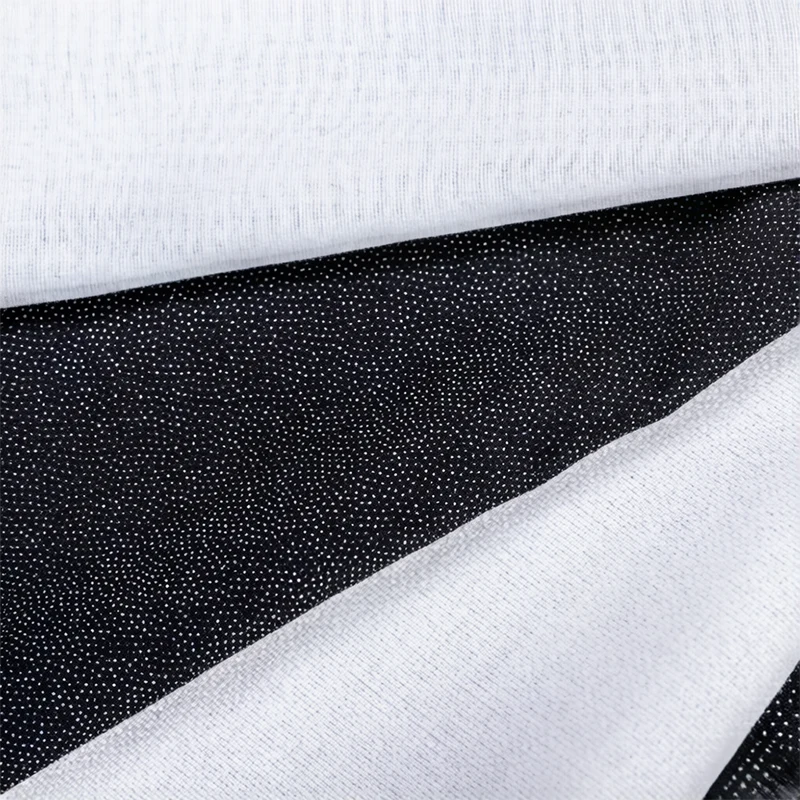
Table of Contents
- What Is Woven Interlining Fabric?
- Why Does Woven Interlining Matter in Garment Manufacturing?
- What Are the Key Benefits?
- Where Is Woven Interlining Fabric Used?
- How Should Buyers Choose the Right Material?
- Woven Interlining Fabric Selection Table
- What Quality Factors Should Manufacturers Check?
- How Is Woven Interlining Fabric Applied?
- Frequently Asked Questions
- Conclusion
What Is Woven Interlining Fabric?
Woven interlining fabric is a textile reinforcement material placed between layers of a garment or textile product. It is generally manufactured using woven yarn structures that provide controlled strength, stability, and dimensional performance. Depending on the end use, it may be supplied as a fusible or non-fusible construction.
Fusible interlining typically incorporates an adhesive coating on one side. During garment production, controlled heat and pressure activate the adhesive so that the interlining bonds with the outer fabric. This creates a composite structure that can improve body, shape retention, and resistance to deformation.
Because woven construction provides directional stability, it can be particularly useful when manufacturers need predictable reinforcement without unnecessarily changing the appearance or handling characteristics of the face fabric.
Why Does Woven Interlining Matter in Garment Manufacturing?
Garment fabrics often need additional support in areas exposed to repeated movement, pressing, tension, or mechanical stress. A carefully selected interlining can help maintain the intended shape of these areas throughout manufacturing and subsequent use.
For example, collars need sufficient body to retain their profile, while cuffs and waistbands need dimensional stability. Jacket fronts may require reinforcement to create a clean silhouette, and pockets may benefit from additional support around openings and attachment points.
The performance of an interlining depends on more than fabric weight alone. Fiber composition, woven construction, coating formulation, adhesive distribution, bonding temperature, pressure, dwell time, and compatibility with the shell fabric all affect the final result.
For this reason, textile buyers should evaluate interlining as part of the complete garment system rather than treating it as an isolated material.
What Are the Key Benefits?
The main value of woven interlining is its ability to improve the functional and visual performance of textile products. Depending on its construction and application, it can provide several advantages.
- Improved garment structure: It adds controlled body to areas that require additional support.
- Better shape retention: Reinforced components can maintain their intended dimensions during wear and handling.
- Dimensional stability: Properly selected interlining helps reduce unwanted distortion.
- Professional appearance: It can contribute to cleaner collars, cuffs, waistbands, lapels, and jacket fronts.
- Enhanced durability: Reinforcement can reduce excessive deformation in frequently handled areas.
- Production efficiency: Fusible constructions can simplify the assembly of certain garment components.
- Application flexibility: Different weights and constructions can be selected according to the shell fabric and intended use.
These benefits are most noticeable when the interlining is properly matched with the face fabric. Excessively rigid material can negatively affect drape, while insufficient reinforcement may fail to provide the required support.
Where Is Woven Interlining Fabric Used?
Woven interlining can be used across a broad range of apparel and textile applications. The appropriate specification depends on the garment design, fabric composition, desired hand feel, and production process.
- Suit jackets and formalwear
- Coats and outerwear
- Shirts and blouses
- Collars and cuffs
- Waistbands and belt areas
- Lapels and jacket fronts
- Pocket openings and reinforcement areas
- Uniforms and workwear
- Fashion accessories and textile products
- Home textile components requiring additional body or stability
For lightweight garments, a soft and flexible construction may be preferable. Structured tailoring and outerwear may require stronger support. This makes specification matching a central part of interlining procurement.
How Should Buyers Choose the Right Material?
Selecting woven interlining fabric should begin with the characteristics of the outer fabric and the functional requirements of the finished product. Buyers can evaluate the following factors before placing a bulk order.
1. Fabric Weight
The interlining should provide enough reinforcement without making the finished garment unnecessarily heavy or rigid. Lightweight shell fabrics generally require a correspondingly lighter support material.
2. Construction and Handle
The woven structure influences flexibility, strength, stability, and hand feel. The selected construction should complement the natural movement of the face fabric.
3. Adhesive Compatibility
For fusible products, adhesive compatibility is critical. The bonding system should achieve adequate adhesion while minimizing strike-through, bubbling, delamination, or visible changes to the outer fabric.
4. Fusing Conditions
Temperature, pressure, and dwell time should be established through testing. Production conditions may vary according to equipment, shell fabric, adhesive coating, and garment construction.
5. Dimensional Stability
Interlining should remain stable during pressing, bonding, laundering, and normal garment use. Shrinkage or distortion can affect the finished appearance.
6. End-Use Requirements
A formal suit, casual shirt, protective uniform, and lightweight fashion garment may require very different interlining characteristics. Defining the end use before material selection helps prevent costly trial-and-error procurement.
Woven Interlining Fabric Selection Table
The following table provides a practical framework for evaluating interlining requirements. Actual specifications should be confirmed through samples and production trials.
| Application | Typical Requirement | Preferred Performance | Key Evaluation Point |
|---|---|---|---|
| Shirts | Light to medium support | Soft handle and stable bonding | Comfort and appearance |
| Collars & Cuffs | Controlled stiffness | Shape retention | Edge definition |
| Suit Jackets | Medium structural support | Dimensional stability | Drape and silhouette |
| Outerwear | Higher reinforcement | Strength and stability | Durability under use |
| Waistbands | Stable reinforcement | Shape retention | Resistance to deformation |
| Workwear | Durable reinforcement | Reliable bonding and strength | Repeated-use performance |
What Quality Factors Should Manufacturers Check?
Consistent quality is especially important when interlining is purchased for large-scale garment production. A material variation that appears minor during inspection can become visible across thousands of finished garments.
Professional buyers should consider checking:
- Basis weight and thickness consistency
- Width and roll-to-roll uniformity
- Tensile strength and dimensional stability
- Surface appearance and coating consistency
- Adhesion after fusing
- Resistance to washing or required care conditions
- Compatibility with the target shell fabric
- Color and batch consistency where applicable
- Packaging and moisture protection during transportation
Batch traceability and documented quality-control procedures can also help manufacturers investigate production variations and maintain stable sourcing over repeated orders.
How Is Woven Interlining Fabric Applied?
For fusible interlining, the application process normally involves positioning the adhesive-coated side against the appropriate surface of the shell fabric, followed by controlled heat and pressure. The exact conditions should be established according to the interlining specification and garment material.
- Prepare the shell fabric: Check cleanliness, moisture condition, and dimensional stability.
- Cut the interlining: Follow the required grain direction and component dimensions.
- Position correctly: Align the interlining with the garment component.
- Apply controlled heat and pressure: Use suitable fusing equipment and validated settings.
- Allow proper cooling: Maintain the bonded structure during cooling to reduce distortion.
- Inspect the result: Check adhesion, bubbles, strike-through, shrinkage, and overall appearance.
Manufacturers should conduct a small trial before full production, particularly when introducing a new shell fabric, adhesive system, or interlining specification.
Frequently Asked Questions
What is the main purpose of woven interlining fabric?
Its primary purpose is to reinforce selected areas of a garment or textile product, helping improve structure, shape retention, dimensional stability, and finished appearance.
Is woven interlining always fusible?
No. Woven interlining can be supplied in fusible or non-fusible constructions. Fusible versions use an adhesive coating activated by heat and pressure, while non-fusible versions can be attached through sewing or other construction methods.
How do I choose the correct woven interlining?
Start with the shell fabric, intended garment component, required stiffness, desired hand feel, care conditions, and bonding process. Testing samples with the actual fabric combination is recommended before bulk production.
Can woven interlining be used for jackets and coats?
Yes. Woven interlining is commonly considered for structured apparel such as jackets, coats, uniforms, and tailored garments where controlled reinforcement and dimensional stability are important.
Why is fusing testing important?
Fusing conditions directly influence adhesion and appearance. Incorrect temperature, pressure, or dwell time can result in weak bonding, bubbling, adhesive strike-through, or fabric deformation. A production trial helps establish suitable parameters.
Can buyers request customized interlining specifications?
Customization may be possible depending on the manufacturer's production capabilities. Buyers should provide target weight, width, construction, application, bonding requirements, and other performance expectations so the appropriate material can be evaluated.
Conclusion
Woven interlining fabric plays an important role in controlling garment structure, stability, appearance, and long-term performance. The best material is not simply the heaviest or strongest option; it is the one that provides the required reinforcement while remaining compatible with the shell fabric, production process, and final application. By evaluating construction, weight, bonding behavior, dimensional stability, and quality consistency, garment manufacturers can make more reliable sourcing decisions. If you are evaluating woven interlining for apparel or textile production, explore Derusen's textile material solutions and contact us to discuss your application, specification, sampling, and bulk-order requirements.